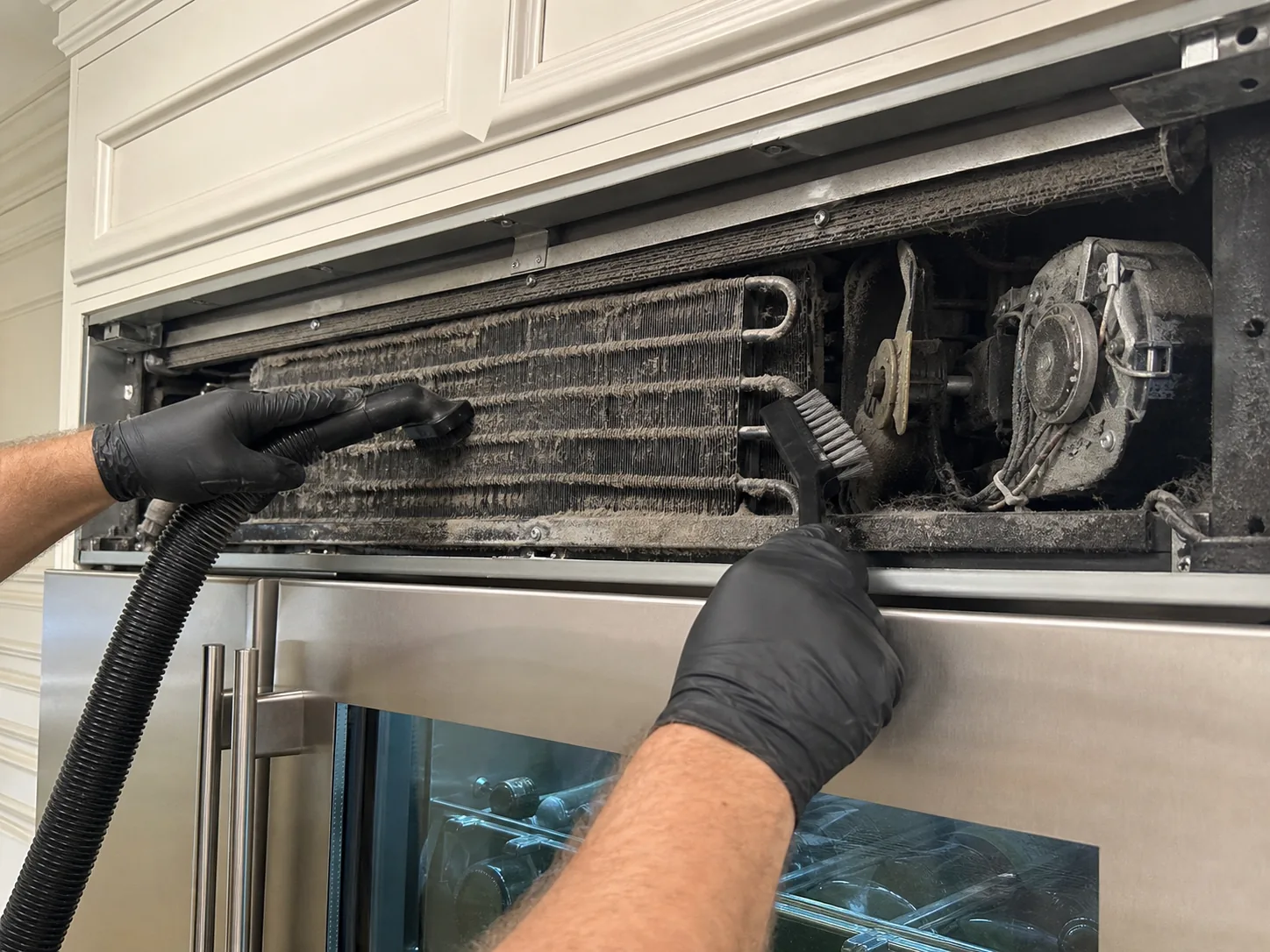
“Preventive service on our BI-42 in West Menlo Park. The tech put the condenser coil on an every 6-12 month cleaning cadence, verified fresh-food at 37°F after the clean, and the routine maintenance visit ran $210 with the schedule left in writing.”
Maintenance calendar · Menlo Park
Menlo Park Sub Zero Maintenance Calendar: evidence-first Sub-Zero guidance
Last updated: June 5, 2026
Menlo Park Sub-Zero maintenance should track condenser airflow, gasket condition, independent temperature readings, ice maker water flow and wine-zone drift before a small symptom becomes an emergency. The first diagnostic habit is a quarterly temperature and airflow check, with owner tasks kept separate from technician tasks. Do not treat maintenance as refrigerant work; sealed-system diagnosis is a regulated service path after symptoms and evidence require it.

What this usually means
Maintenance is evidence collection before failure
A built-in Sub-Zero refrigerator should not wait until both compartments are warm before anyone looks at airflow, seals or temperatures. A quarterly owner check can catch the common problems: dust at the condenser grille, a gasket beginning to leak, a fresh-food section running a few degrees above setpoint, hollow ice cubes, or a wine zone drifting gradually. The maintenance calendar turns those observations into action before the unit becomes an emergency.
The boundary matters. Owners can keep grilles clear, take temperatures, photograph frost or condensation, note alarms and replace water filters according to manufacturer guidance. Refrigerant handling, electrical component testing, cabinet pulls and sealed-system diagnosis belong to qualified service personnel. The calendar below keeps those responsibilities separate so a helpful owner does not accidentally damage the appliance or erase evidence.
Task -> interval -> owner/technician boundary
Maintenance calendar
| Task | Interval | Owner boundary | Technician boundary |
|---|---|---|---|
| Independent temperature check | Quarterly and during heat waves | Place thermometer in each compartment and record readings | Diagnose sensor, fan or control if readings drift |
| Condenser grille airflow | Quarterly | Keep grille area clear and photograph dust buildup | Deep-clean coil, inspect fan and verify run temperature |
| Door gasket condition | Quarterly | Look for frost line, torn gasket, condensation or weak seal | Match OEM gasket, adjust door/panel alignment |
| Ice maker water flow | Every filter cycle or symptom | Note hollow cubes, slow harvest, filter age and water taste | Check valve, fill tube, freezer temperature and module |
| Wine-zone drift | Monthly for collections | Log actual bottle-zone temperature and display reading | Meter zone sensor, fan and control if drift persists |
Emergency symptoms prevented
Small maintenance signals and what they prevent
| Early signal | Emergency it may prevent | Evidence to save |
|---|---|---|
| Grille feels hotter than usual | Both compartments warming from blocked condenser airflow | Grille photo, coil photo if visible, temperature log |
| Condensation at door edge | Frost buildup and overworked compressor | Gasket photo, door alignment photo, humidity context |
| Hollow or small ice cubes | Ice maker freeze-up or water leak | Cube photo, filter age, freezer temperature |
| Wine zone 3°F above target | Collection exposure during summer heat | Actual thermometer reading and display photo |
| Intermittent alarm | Active fault lost after repeated resets | Alarm photo and model tag before clearing |
Seasonal notes
Menlo Park heat, remodels and cabinet airflow
Summer and early fall can expose marginal airflow because the condenser must reject more heat while the kitchen is warmer. Sharon Heights and Stanford Hills homes with wooded lots can pull more dust and pollen into grille areas. Allied Arts and Central Menlo Park remodels sometimes hide original ventilation behind beautiful but restrictive trim. In all of these cases, a quarterly airflow and temperature log gives a technician evidence before the unit fails. In Menlo Park, Sub-Zero condenser coils should be cleaned about every 6-12 months — more often near bayfront Belle Haven, where salt-marsh humidity loads and corrodes the coil; a routine condenser clean typically runs $190-$460. Soft Hetch Hetchy water means less scale, so a target of 37°F fresh-food and 0°F freezer is easier to hold between visits.
Maintenance should also respect privacy and property access. For estate or managed homes, note who is allowed to open panels, who approves service and where the water shutoff is located. A maintenance calendar is most useful when the person taking readings can also have the model tag ready and owner approval route quickly if a symptom appears.
| Local issue | Prep |
|---|---|
| Wooded-lot dust and pollen | Photograph grille and schedule coil review if heat rises |
| Panel-ready remodel trim | Confirm airflow openings are not blocked |
| Estate or managed access | Keep owner approval and water shutoff notes in the file |
| Wine collection risk | Log zone readings monthly and before hot weeks |
When not to guess
Maintenance does not mean DIY sealed-system work
Do not add refrigerant, pierce lines, force panels, chip ice from a mold, cut gaskets or keep resetting alarms as maintenance. Those actions can damage the unit and destroy evidence. Good owner maintenance is observation, cleaning around safe access points, temperature logging and early reporting. Anything involving refrigerant, electrical diagnosis, cabinet pulls or sealed-system testing belongs in a service visit.
Quarterly check
Quarterly Sub-Zero maintenance check for Menlo Park owners
- Record temperatures. Measure fresh-food, freezer and wine zones with an independent thermometer.
- Check airflow. Keep grille area clear and photograph visible dust or heat signs.
- Inspect seals. Look for frost lines, condensation, torn gasket material and panel misalignment.
- Save evidence. Store model tag, readings, photos and filter dates in a service file.
Maintenance FAQ
Sub-Zero maintenance questions
How often should a Menlo Park Sub-Zero be checked?
A practical calendar is quarterly for temperatures, grille airflow and gasket condition, with monthly wine-zone checks for collections. Add a quick check before summer heat or after a remodel changes cabinetry. The goal is to catch drift, dust, frost, small leaks or ice maker symptoms before a not-cooling emergency.
What can an owner safely do?
Owners can keep the grille area clear, record independent temperatures, photograph alarms, note water or frost patterns and check visible gasket condition. They should avoid refrigerant work, electrical testing, forcing panels, cutting gaskets or pulling a built-in. Observing and documenting evidence is useful; guessing inside the system is not.
Why is condenser airflow so important?
A built-in Sub-Zero must reject heat through its condenser. Dust, pet hair, pollen or blocked grille airflow makes the unit run hotter and longer, sometimes mimicking a sealed-system fault. A simple airflow review can prevent a whole-unit warm emergency and can also stop needless compressor assumptions.
Should I track temperatures with the display or a thermometer?
Use both. The display shows what the control thinks, while an independent thermometer shows what the compartment actually experiences. A mismatch can point to sensor drift, airflow pockets or control issues. Record both readings with the model tag and symptom photo if service is needed.
What maintenance matters for wine storage?
Wine storage needs actual zone readings, stable door seals, clean airflow and attention to small drift. A persistent 3-5 degree change matters more for collections than for everyday refrigeration. Log display and thermometer readings, avoid repeated bottle moves, and have the zone evidence ready if drift continues.
Can maintenance prevent all sealed-system failures?
No. Maintenance can reduce airflow-related overheating and catch symptoms early, but it cannot prevent every leak, compressor or control failure. It can, however, keep cheap causes from masquerading as expensive ones. A clean condenser and clear evidence make the sealed-system decision more accurate when diagnosis is needed.
What should be saved for the service file?
Save the model and serial photo, installation notes, any prior invoices, quarterly temperature logs, filter dates, symptom photos and owner approval contact. That file helps avoid repeated intake questions and makes future Sub-Zero repair in Menlo Park faster, especially for managed or estate properties.

Next step: have evidence ready before the visit
Start a simple maintenance file: model tag, serial, quarterly temperatures, grille photos, gasket observations, filter dates and any alarm photos. Have the file ready if a symptom becomes a repair request.
Internal citation paths
Related Menlo Park Sub-Zero pages
Local reviews
Recent Menlo Park Sub-Zero service reviews
Local feedback on model-first diagnosis, clean built-in work and written pricing.
138 local reviews
“Gasket check and filter change on our 650 in Suburban Park. They inspect door seals every 6 months, replaced the water filter, confirmed the freezer held 0°F, and the full maintenance plus parts came to $340 with no upsell into a big repair.”
“Wine-zone and condenser preventive maintenance on our BI-42 in Stanford Hills, a wooded lot whose pollen and dust load the coil. Coils were cleaned on an every 6-12 month cadence, the wine zone re-verified at 55°F, and the seasonal maintenance visit was $240 with temperatures recorded in writing.”