
★★★★★
“Our BI-48 made hollow, slow cubes in our 1920s Allied Arts bungalow. An overdue filter and a weak fill valve were the cause; both replaced in under two hours for $410, right in the quoted range.”
Symptom guide · Ice & water
When a Sub-Zero ice maker slows down, jams, or starts producing hollow or undersized cubes, the cause is usually upstream of the ice mold — a fill tube, inlet valve, clogged filter or a module/thermistor issue — not the whole assembly. In Allied Arts, where older built-ins are common, a condenser coil packed with dust or pet hair can also drag down freezer performance enough to starve the ice maker, so we check the cold side too.
People sometimes pair this with a sweating door and assume one cause. Often they’re separate: a door gasket leak with condensation or a frost line stresses the compartment, while hollow cubes trace to water flow. What a diagnosis confirms — and what you can’t know from the cube shape alone — is whether the water supply, the valve, or a freezer temperature problem is starving the mold.
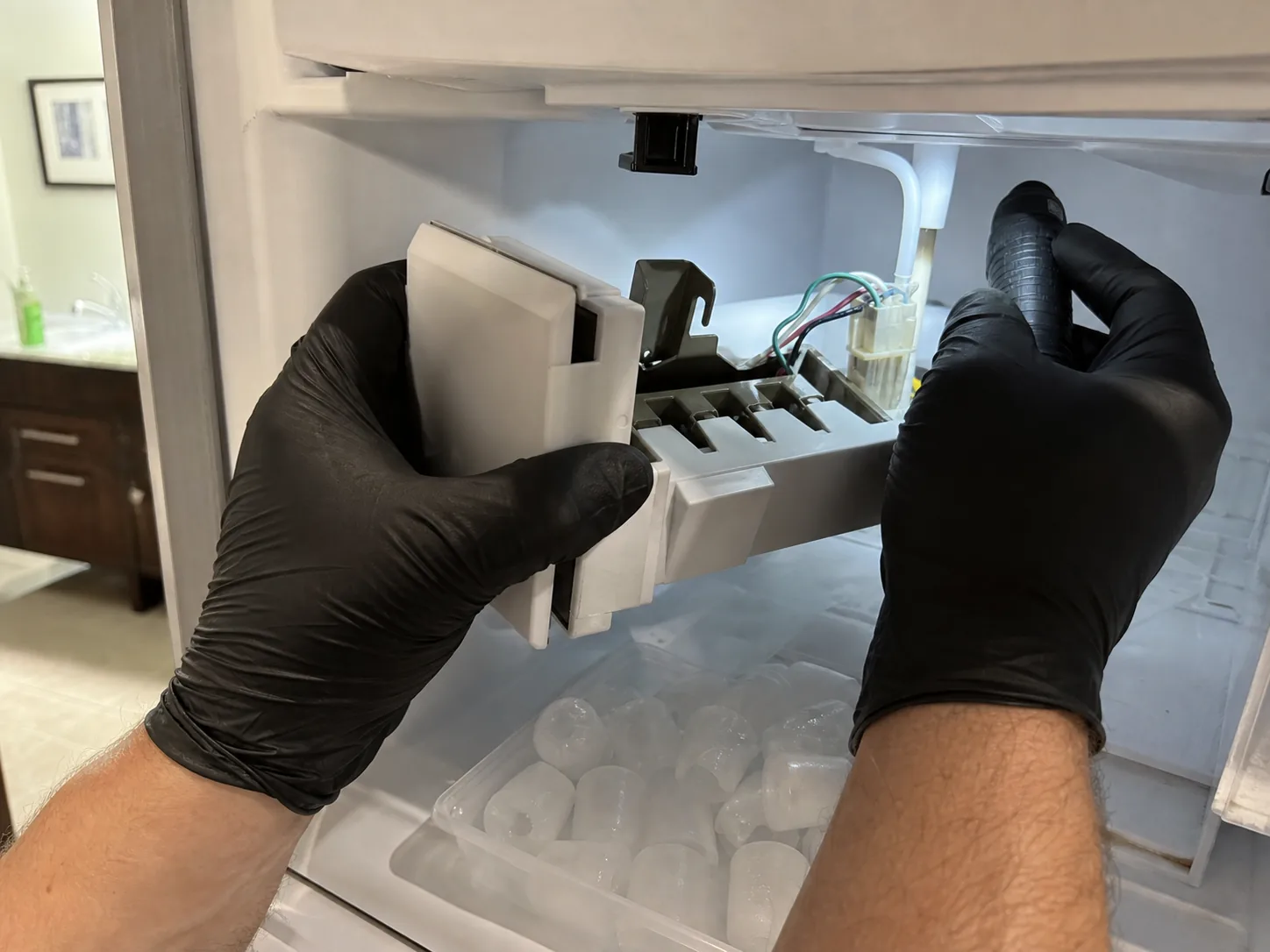
Hollow or slow cubes trace upstream of the mold: inspect the fill tube for an ice plug, listen for the inlet valve, change an overdue filter, and confirm the freezer holds about 0°F. Allied Arts owners near 94025 can book Menlo Park Sub-Zero Repair at (650) 699-5567 today.
Normal vs. not normal
A healthy Sub-Zero ice maker produces clear, solid, consistently sized cubes and refills the bin within a normal cycle. Slightly slower production after a big draw, or a few cloudy cubes after a filter change, is normal. Not normal: persistently hollow or shrunken cubes, a maker that has stopped entirely, ice with an off taste, or water pooling near the unit. Hollow and undersized cubes almost always mean the mold isn’t getting enough water — a partial fill from a kinked tube, a failing inlet valve, or a clogged filter restricting flow. Stop forcing a jammed mold or chipping at stuck ice; you can crack the mold heater and turn a small repair into a larger one.
Ranked, simple to expensive
Local context
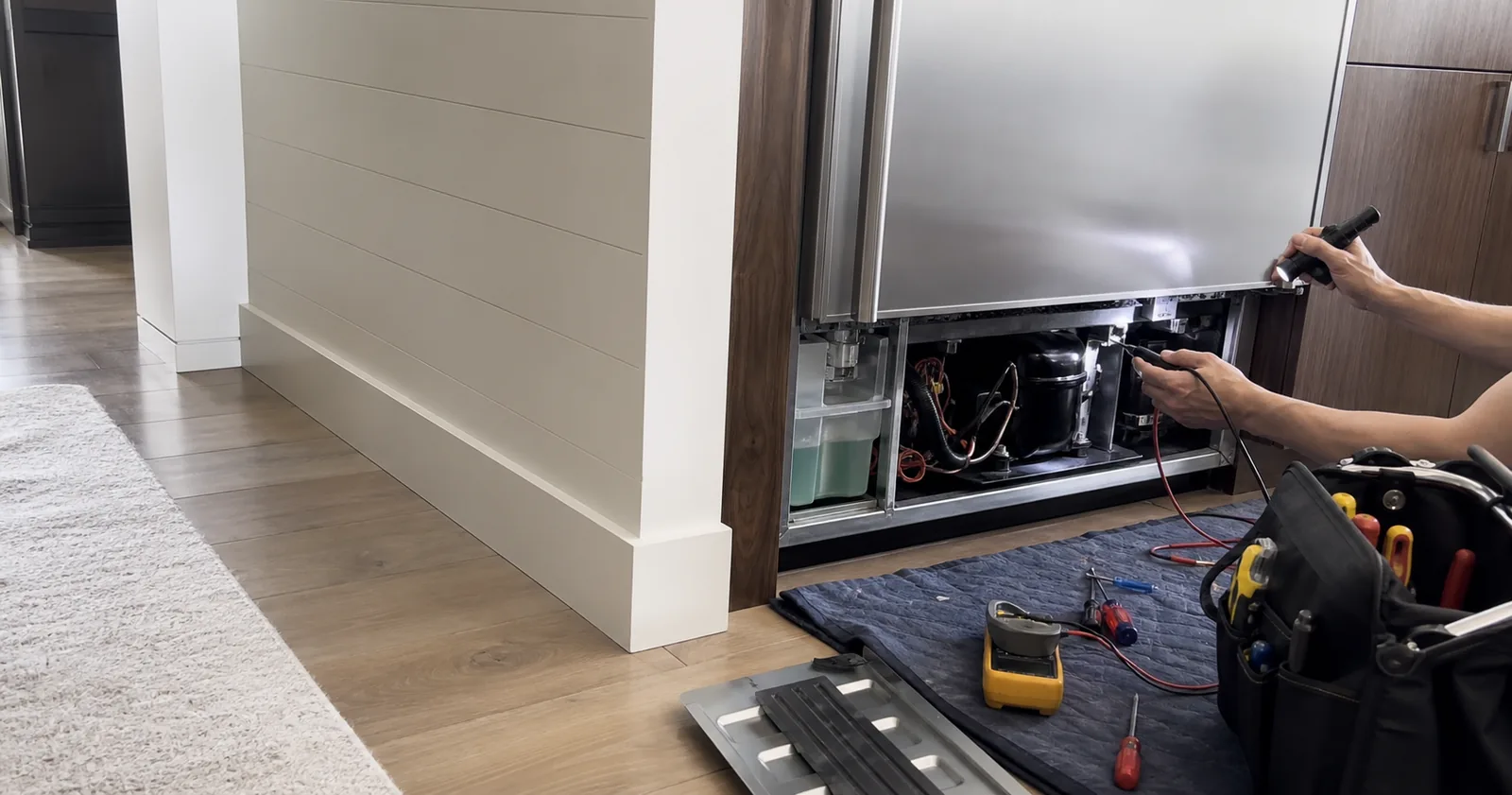
In Felton Gables, the older housing stock means older water lines and shut-off valves feeding built-in ice makers, so a slow fill is sometimes the supply, not the appliance — we check both. Across Central Menlo Park, remodels of varying ages mean a mix of filter types and line routing, and an integrated unit’s fill tube can run through tight cabinetry where a slow freeze causes a partial fill. Because these are built-ins, access to the valve and line is planned ahead so we’re not opening cabinetry blind on the day.
What the technician checks
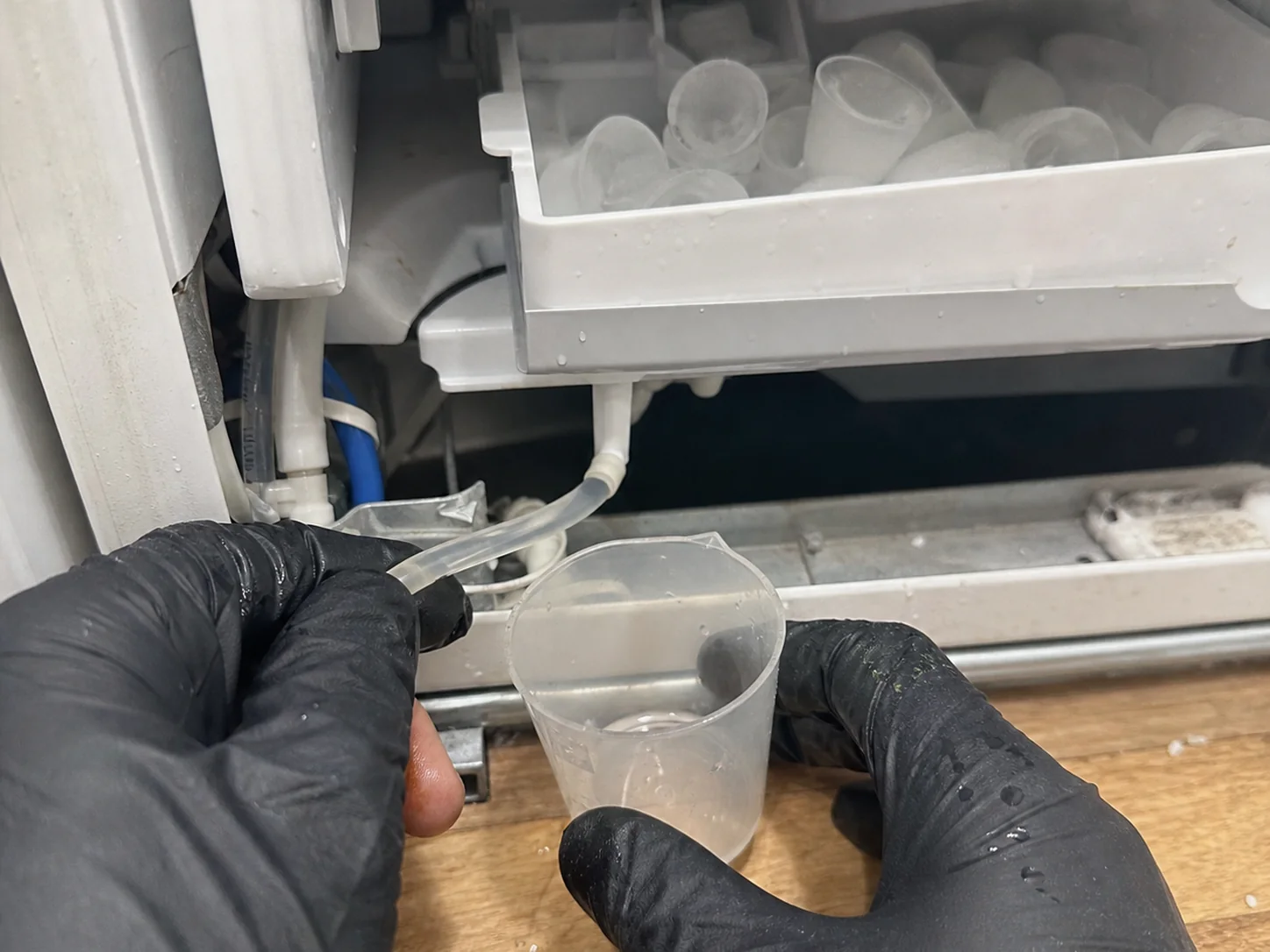
The proof: a close-up of the fill/valve test point and a wider view of the unit in its cabinet. We back it with temperature readings, model-tag proof and the OEM part fitted — the evidence that also surfaces a sealed-system suspicion that needs qualified verification when the freezer itself is the cause.

Before you book
Six checks you can do safely on a BI-48 internal ice maker or a UC-15I undercounter clear-ice maker before a Menlo Park visit. Stop at any step that needs the cabinet opened or the sealed system touched.
Put a thermometer in the freezer for 4–6 hours. A BI-48 ice maker needs roughly 0°F (-18°C); if it reads 10°F or warmer, fix the cooling first — the ice slowdown is a symptom.
Find the filter, note its install date, and replace it if it is older than 6–12 months. In Allied Arts homes an overdue filter is the most common cause of small, slow cubes, even on Menlo Park’s soft water.
Look for an ice plug in the fill tube and listen for the inlet valve buzzing at fill. A frozen fill tube produces hollow or partial cubes; a silent valve means no water reaches the mold.
Trace the line to the shut-off or saddle valve. On 1920s–40s copper lines watch for sediment, green corrosion or a slow drip — a tired saddle valve starves the fill more often than scale does here.
Discard the first two batches after any filter or line work, then time a full harvest. Note how many minutes a cycle takes and whether cubes come out clear and solid; bring that number to the booking.
If water flow checks out but the maker won’t cycle or eject, photograph the model/serial tag and book. A module or thermistor swap is matched to a BI-48 or UC-15I, so the right part arrives on the first visit.
Symptom -> cause -> price -> time
| Symptom | Likely cause | Planning range | Typical time |
|---|---|---|---|
| First visit to diagnose | Diagnostic visit (credited toward repair) | $110–$195 | 45–75 min |
| Hollow or slow cubes | Water filter + fill valve | $285–$560 | 1–2 hr |
| No ice at all | Frozen fill tube / inlet valve | $300–$640 | 1–2 hr |
| Water pooling near the unit | Saddle valve / line / fitting leak | $240–$520 | 1–2 hr |
| Ice taste or odor | Filter change + line flush | $180–$360 | 45–90 min |
| Maker won’t cycle or eject | Ice maker module / thermistor | $320–$720 | 1.5–2.5 hr |
| Multiple failed ice-maker parts | Ice maker assembly replacement | $520–$980 | 2–3 hr |
Menlo Park’s soft Hetch Hetchy water makes mineral scale a rare cause here, so most ice-maker repairs land in the $180–$640 band — sediment from older Allied Arts copper lines and overdue filters drives the work, not hard-water scale.
Ice maker questions
Hollow and undersized cubes almost always mean the mold isn't filling completely — a clogged filter, a kinked or partly frozen fill tube, or a weak inlet valve. We measure the fill per cycle to find which, and a filter-plus-fill-valve repair typically runs $285–$560.
Rarely from scale. Because Menlo Park runs largely on soft SFPUC Hetch Hetchy water, mineral scale clogs are uncommon here. Most ice faults trace to an overdue filter or sediment from old supply lines instead, with repairs typically landing in the $180–$640 range.
Yes. The 1920s–40s homes in Allied Arts and Felton Gables often have aging copper or galvanized supply lines and tired saddle valves that shed sediment. That sediment starves the fill valve and clogs filters, so a line or saddle-valve leak repair runs about $240–$520.
About every 6–12 months, even on soft water. Soft Hetch Hetchy water does not stop a filter from loading with sediment from older lines. An overdue filter is the leading cause of slow, hollow cubes here; a filter and line flush runs roughly $180–$360.
Sometimes. If the freezer isn't cold enough — say from a dusty condenser or a fan fault — the ice maker slows as a symptom. A BI-48 ice maker needs about 0°F; we read the freezer temperature so we fix the cause, not just the ice maker.
On a built-in BI-48 it is most often the saddle valve, a compression fitting, or the line itself rather than the appliance. We trace the run through the cabinetry, confirm the shut-off location, and repair the leak in the $240–$520 range without pulling the whole unit.
Have cube-shape details and your model tag ready — we’ll tell you whether it’s the filter, the valve or the freezer, before the visit.
Local reviews
Local feedback on model-first diagnosis, clean built-in work and written pricing.
“Our BI-48 made hollow, slow cubes in our 1920s Allied Arts bungalow. An overdue filter and a weak fill valve were the cause; both replaced in under two hours for $410, right in the quoted range.”
“No ice from our BI-48 at all. The tech found a frozen fill tube, cleared it, and confirmed the freezer was holding 0°F before leaving. Done in about 90 minutes for $360 — no parts oversold.”
“Water was pooling under our UC-15I undercounter clear-ice maker. It was a tired saddle valve on the old copper line, not the appliance. Fixed at the shut-off for $295 without pulling the unit out.”