“I texted the behind-grille model/serial tag for our BI-36 plus a wide cabinet shot and a close-up of the warm fresh-food vent. For our Belle Haven townhouse the technician arrived with the serial-matched evaporator fan already on the truck and fixed it first visit, same-day, with no second trip.”
Model checklist · Menlo Park
Menlo Park Sub Zero Model Number Photo Checklist: evidence-first Sub-Zero guidance
Last updated: June 5, 2026
Before a Menlo Park Sub-Zero visit, the model and serial photo can determine whether the technician can stock the correct gasket, fan, valve, board or sealed-system part on the first trip. The model family points to tag location and part category; the serial confirms production changes. have the full label ready, not just a typed model, plus temperatures, cabinet photo and symptom close-up.

What this usually means
The tag changes parts, access and the quote path
A built-in Sub-Zero refrigerator may look identical from the kitchen, but the model and serial number decide which gasket profile, fan motor, control board connector, valve, thermistor and ice maker assembly belongs inside. A model typed from memory can be enough to start a conversation, but it is not enough to stock parts confidently. A photo proves the series and serial at the same time, and it catches digits that are easy to transpose during an emergency.
In Menlo Park homes with multiple integrated columns, the photo also prevents the wrong appliance from being quoted. One warm fresh-food column beside a separate freezer column may share the same panel style but use a different model family. The first test is not removing panels; it is matching the symptom to the exact appliance.
Model family -> tag location -> part risk
Where to look by Sub-Zero family
| Model family | Common tag location | Photo angle | Part risk if missing |
|---|---|---|---|
| Classic / built-in | Behind top grille or inside upper sidewall | Wide shot, then close-up label | Wrong evaporator fan, gasket or control variant |
| Designer / integrated columns | Interior sidewall or door frame, often high | Use phone light and keep panel open | Column-specific sensor, board or hinge/gasket risk |
| Legacy 600 / 700 series | Behind grille, interior wall or old paperwork | Wipe dust and photograph serial clearly | Discontinued or revised parts need serial proof |
| Wine storage | Inside cabinet frame, near zone or grille | Include zone and display if drifting | Wrong zone sensor, fan or rack-access plan |
| Undercounter drawers | Door/drawer frame or interior side | Pull drawer partly open and shoot straight | Drawer slides, valve and control mismatch |
Good photo checklist
How to take a usable model-tag photo
| Photo | Must show | Why |
|---|---|---|
| Wide appliance photo | Full built-in, doors/panels, surrounding cabinet | Shows access, panel style and whether a pull is likely |
| Full tag photo | Model, serial, voltage line and production information | Prevents part mismatch and serial-digit errors |
| Close-up tag photo | Sharp model and serial numbers | Lets intake read the label without guessing |
| Symptom photo | Alarm, frost, water, cube shape or thermometer | Links the model to the actual failure path |
| Temperature photo | Independent thermometer or display plus setpoint | Separates display drift from real compartment temperature |
What can be identified before visit
What the tag can and cannot decide
The model and serial number can identify likely gasket profile, fan motor family, ice maker assembly, water valve, control-board generation, sensor family and access expectations. It can also reveal whether the unit is old enough for repair-vs-replace planning if a major fault is confirmed. That is why the tag is so important for one-visit repair planning.
The tag cannot prove the failed part. A warm fresh-food section still needs vent readings, evaporator inspection and meter tests. A suspected sealed-system problem still needs airflow ruled out and proper pressure/leak evidence. The tag is the planning proof; the diagnosis is the repair proof.
A clear photo of the model/serial tag plus a wide cabinet shot and one close-up symptom photo lets a Menlo Park technician arrive with the serial-matched gasket, board or fan, avoiding a second visit to a hillside Sharon Heights or estate address where a return trip is costly. Sending those three images before dispatch is the single biggest factor in a confirmed first-visit Sub-Zero repair in Menlo Park.
| Can identify before visit | Cannot identify before visit |
|---|---|
| Likely part family and availability | Which component has electrically failed |
| Gasket profile and door style | Whether a door is warped or just misaligned |
| Cabinet pull expectations | Whether the unit must actually be pulled |
| Repair-vs-replace context | Final quote without diagnostic evidence |
Local notes
Real Menlo Park photo problems
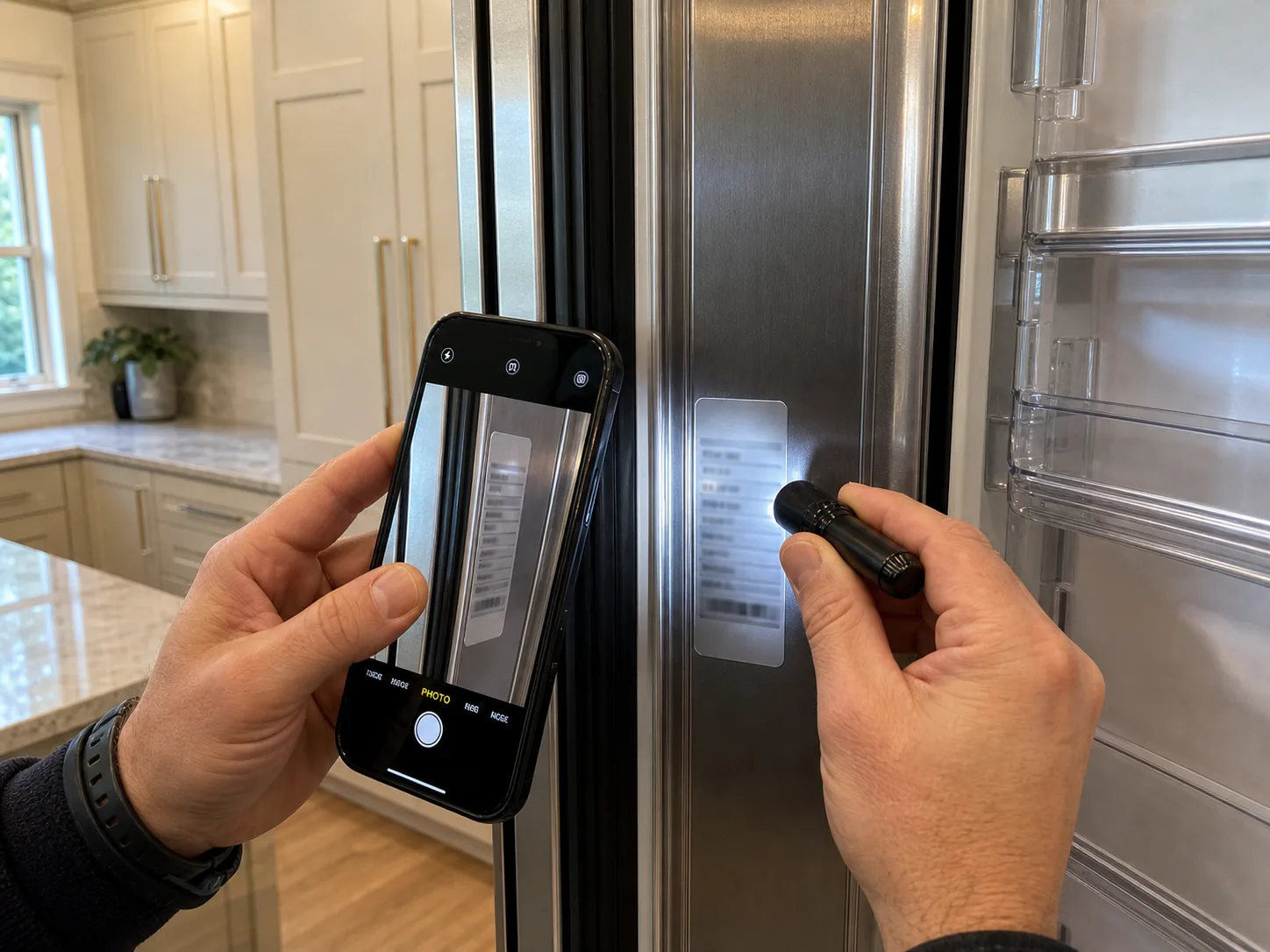
In older Allied Arts and Felton Gables homes, labels can be dusty, faded or partly hidden by trim from an earlier remodel. In Stanford Hills and Sharon Heights kitchens, integrated columns may be installed so flush that the owner assumes the tag is unreachable, when it is actually behind the grille or inside the upper sidewall. Use a phone flashlight, shoot straight at the label, and include a wide photo first. If the tag is truly unreadable, have ready the original invoice, appliance paperwork or a photo of any installer label.
When not to guess
Do not let a partial model number create a false quote
A partial model can make two units look the same when their serial ranges use different parts. Do not approve a gasket, board or compressor path from a partial label or a generic appliance description. If the photo is blurry, retake it. If the label is inaccessible, say so and have paperwork ready. The goal is to avoid the expensive version of "almost the right part."
Photo steps
How to photograph a Sub-Zero model and serial tag
- Take a wide appliance photo. Show the built-in, cabinet trim and surrounding access.
- Find the label. Check behind the grille, upper interior sidewall, door frame or paperwork.
- Photograph the full label. Capture model, serial and production information in focus.
- Add symptom evidence. Include temperatures, alarm, frost, water or cube-pattern photos.
Model checklist FAQ
Model and serial photo questions
What model photo should I have ready before dispatch?
Have a wide appliance view ready, a full tag photo and a close-up of the model and serial numbers. Include the symptom photo and current temperatures in the same message. The full label matters because serial ranges can change fan, gasket, board, valve and sensor variants even within the same model family.
Where is the model and serial number on a built-in Sub-Zero?
Common locations are behind the top grille, on an upper interior sidewall, inside the door frame or in the original paperwork. Designer columns and wine units can place labels higher or inside the frame. Use a phone light and take both a wide photo and a close-up so the context is clear.
Is a typed model number enough?
A typed model number can start intake, but a photo is better for dispatch. Typed digits are easy to transpose, and the serial number is often missing. The serial can decide production changes and part compatibility, so a clear photo reduces second-visit risk and protects the quote from assumptions.
What if the label is faded or unreachable?
have the best photo ready you can, then have original appliance paperwork ready, an installer invoice or any service history that lists the model and serial. If the label is truly unreadable, say that during intake so the technician can plan verification on site before parts are opened.
Can the tag prove whether the compressor failed?
No. The tag can identify the compressor family and whether parts may be available, but it does not prove failure. A sealed-system or compressor diagnosis still requires airflow checks, electrical tests and pressure/leak evidence where appropriate. The tag plans the visit; testing confirms the repair.
Why does the wide cabinet photo matter?
The wide cabinet photo shows whether the built-in is flush, panel-ready, blocked by trim, close to delicate flooring or likely to need a protected pull. It helps plan time and tools before dispatch. The model tag tells the appliance story, but the cabinet photo tells the access story.
Do I need to empty the refrigerator to photograph the tag?
Usually no. Most tag locations are behind the grille, on a sidewall or inside the door frame, so a quick phone-light photo is enough. If food or bottles block the label, move only what is needed and keep the door open as briefly as possible to preserve temperature evidence.

Next step: have evidence ready before the visit
Before booking, Have a wide appliance view ready, full model/serial tag, close-up tag, current temperatures and one symptom photo. Those five images usually decide what parts and access plan should be prepared.
Internal citation paths
Related Menlo Park Sub-Zero pages
Local reviews
Recent Menlo Park Sub-Zero service reviews
Local feedback on model-first diagnosis, clean built-in work and written pricing.
138 local reviews
“The sidewall tag photo on our 700TR column, plus a symptom close-up of the frosted evaporator, let the technician match the serial to the right control sensor before dispatch. At our Central Menlo Park estate the part came on the truck and the repair was done first visit for about $420, with no second visit.”
“For our 424 wine unit I sent the in-frame model tag, a wide shot of the custom panels and a close-up of the drifting zone display. In our older Allied Arts home the technician brought the serial-matched zone sensor and door gasket, planned the panel pull, and finished first visit with no second trip.”