Evidence-first Sub-Zero intake across Menlo Park Menlo Park & San Mateo County · Mon–Sat 7am–7pm · (650) 699-5567 · Book Online 4.9/5 on Google · 138 local reviews
Meridian ProsSub-Zero · Menlo Park

Emergency triage · Menlo Park

Menlo Park Sub Zero Emergency Not Cooling Triage: evidence-first Sub-Zero guidance

Last updated: June 5, 2026

A Menlo Park Sub-Zero emergency should be triaged by current temperatures, which compartment failed, food or wine risk, alarm state, water leak risk and whether the model tag is available before dispatch. Sub-Zero not cooling in Menlo Park usually starts with two independent thermometer readings and a condenser airflow check. Same-day diagnosis may be realistic when evidence arrives early; same-day repair depends on the verified fault and parts.

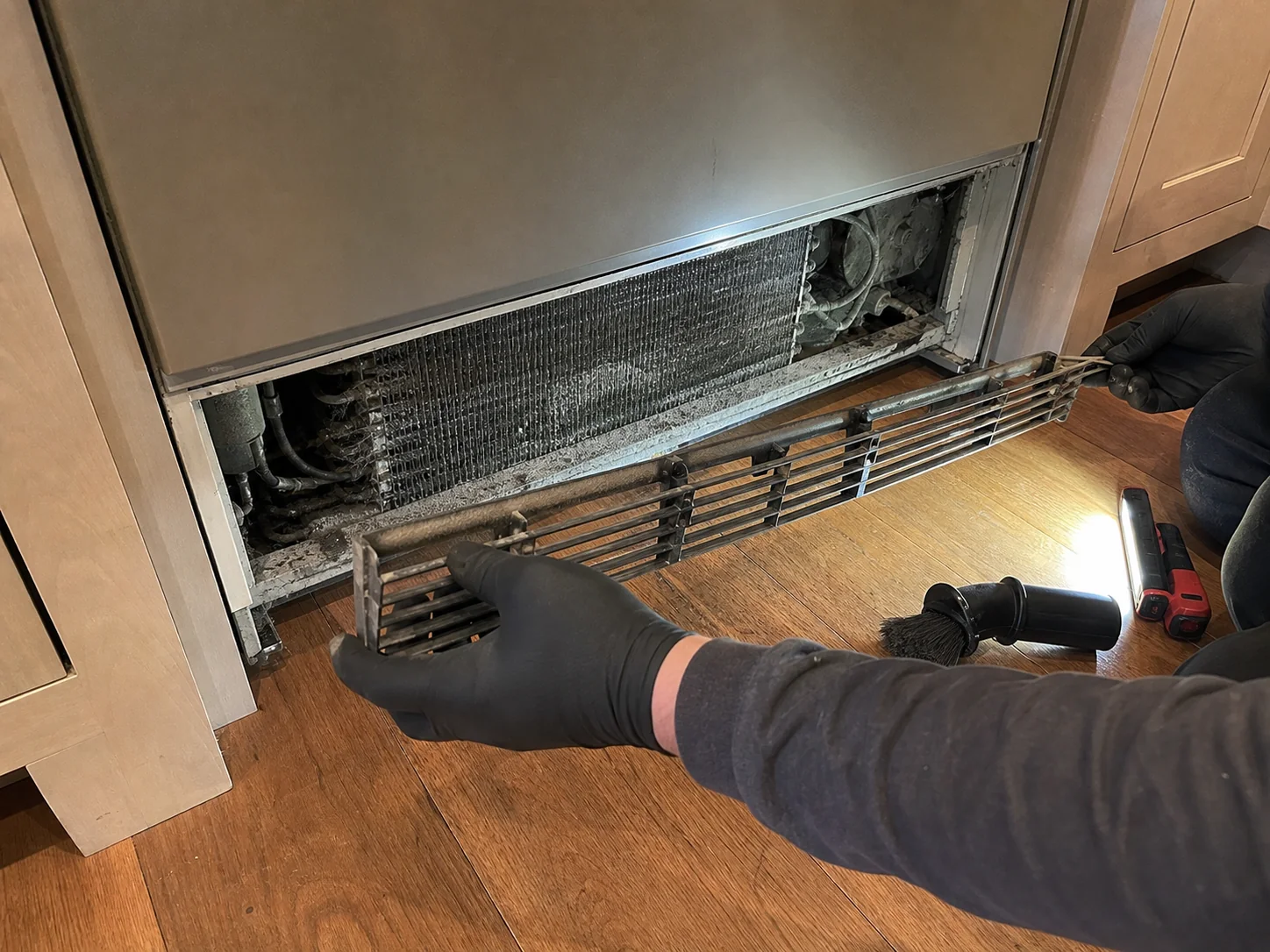
Technician inspecting a dusty built-in refrigerator condenser behind the lower grille
The first emergency question is not a part name. A lower-grille and condenser check can separate airflow restriction from a sealed-system failure before expensive parts are discussed.

What this usually means

Emergency means temperature risk first, part diagnosis second

A built-in Sub-Zero refrigerator can drift from inconvenience to emergency when perishable food is already above safe holding temperature, when wine storage is climbing steadily, when an alarm repeats after a reset, or when water is present around the ice maker or supply line. The first diagnostic step is to separate the case: fresh-food warm with freezer cold, freezer warm, both sides warm, wine zone drifting, alarm with door condition, or water leak. Each path has a different first test.

Do not clear codes repeatedly or keep opening the door to check whether the unit feels cooler. Door cycling adds heat and humidity, and cleared alarms remove the evidence that narrows the diagnosis. The better action is to note setpoint and actual temperature, photograph the panel, move high-risk food or bottles to stable storage, and have the model and serial number ready. Menlo Park homes with panel-ready built-ins often hide the condenser behind a tight grille, so a warm unit can be simple airflow or a sealed-system problem until inspected. A Sub-Zero holding above ~45°F puts fresh food at risk within ~2-4 hours, and a Menlo Park summer heat wave into the 90s°F can push a dust-packed condenser over the edge; same-day triage separates an airflow or fan fault ($190-$620) from a verified sealed-system failure, which is why two thermometer readings and a grille check come before any part is named.

First 30 minutes

Safe actions while preserving evidence

MinuteActionWhyDo not
0-5Read fresh-food and freezer temperatures with an independent thermometerSeparates a single-compartment fault from a whole-system faultDo not reset the control before taking a photo
5-10Photograph the display, alarm and model tagPreserves evidence for model-specific planningDo not assume the compressor from a warm display
10-20Move high-risk food or wine to a stable cooler if temperatures are unsafeProtects contents without overworking the unitDo not keep loading warm groceries into the cabinet
20-30Check for visible water around ice maker, floor and supply lineWater risk changes priority and access planningDo not pull a built-in alone or force the water line

Symptom to priority

Emergency priority by observed evidence

SymptomEmergency priorityFirst actionLikely first test
Fresh-food 50°F+, freezer near 0°FHigh if food is at riskLog both readings and keep door closedFresh-food evaporator fan, frost pattern, thermistor
Both sides warming and grille hotHighClear grille area and have cabinet access details readyCondenser airflow and coil condition
Freezer rising with ice meltingHighProtect floor and remove loose iceFreezer fan, defrost, sealed-system after airflow
Water on floor or under unitImmediate water-risk triageStop using ice maker if safe and document leak pathFill tube, valve, drain, supply line
Wine zone drifting 3-5°FTime-sensitive for collectionsMove irreplaceable bottles to stable storageZone sensor, fan, gasket, condenser airflow

Same-day diagnosis vs repair

What same-day realistically means

Same-day diagnosis is often possible when the model tag, temperatures and photos arrive early enough to route a technician. Same-day repair is more conditional. A common evaporator fan, gasket, thermistor, ice maker part or condenser airflow correction may finish in one visit if the part is available and access is safe. A sealed-system repair, rare control board or cabinet pull can require a longer window, written approval or a return with the exact part.

For property-managed homes, same-day can be lost to paperwork rather than parts. If a tenant reports the emergency but the owner must approve the quote, the fastest path is to include the owner contact, approval limit and access window in the first phone. For Sharon Heights and Stanford Hills homes with hillside drives or privacy gate access, arrival details matter as much as the appliance symptom.

ResultUsually possible same dayOften needs more
DiagnosisWith model tag, temperatures and access infoMissing model tag or blocked access
RepairCommon fan, gasket, valve, sensor, coil cleaningRare board, sealed system, owner approval delay
Quote approvalOwner or manager available by phoneUnknown approval contact or spending limit

Local notes

Menlo Park details that change emergency planning

Sharon Heights and Stanford Hills calls often involve larger built-in or column units set into high-value cabinetry, where a rushed pull can cause damage that costs more than the original cooling repair. Allied Arts and Central Menlo Park homes may have older remodels with tight clearances or older water shutoffs. West Menlo Park and Felton Gables homes can have narrow access paths that require the technician to plan tools and floor protection before arrival. These are not marketing details; they are the practical facts that decide whether a not-cooling Sub-Zero can be triaged quickly and safely.

When not to guess

Emergency does not make guessing safer

Do not promise a compressor, control board, sealed-system repair or manufacturer warranty outcome by phone. Emergency triage is about priority, preservation and evidence. The part diagnosis still requires airflow inspection, electrical readings, service-mode evidence or pressure/leak testing where appropriate. A good emergency answer tells the owner what to do now, what to have ready, and which claims cannot be made until the technician confirms the fault.

First 30 minutes

First 30 minutes for a Menlo Park Sub-Zero not-cooling emergency

  1. Record temperatures. Read fresh-food and freezer temperatures with an independent thermometer.
  2. Preserve evidence. Photograph the display, alarm and model tag before resetting controls.
  3. Protect contents. Move high-risk food or wine to stable storage if temperatures are unsafe.
  4. Have intake details ready. Have model tag, symptom details, temperatures, water risk and owner approval contact ready if needed.

Emergency FAQ

Emergency not-cooling questions

What counts as a Sub-Zero emergency?

A Sub-Zero emergency is a temperature, water or contents-risk problem that needs triage before normal scheduling. Food above safe temperature, a freezer thawing, wine collection drift, repeated alarms or water on the floor all qualify. The first response is to document temperatures and risk, preserve contents, and have the model tag ready before dispatch.

What should I do in the first 30 minutes if the refrigerator is warming?

Read both compartments with an independent thermometer, photograph the display or alarm, keep the doors closed and move high-risk food to stable storage if temperatures are unsafe. Do not repeatedly reset the unit or open the door to check progress. Have the model tag, readings and symptom details ready so the first test can be planned.

Can same-day service repair the unit or only diagnose it?

Same-day diagnosis may be realistic when the evidence arrives early and the route has capacity. Same-day repair depends on the verified fault, available parts, cabinet access and approval. A fan, gasket, sensor, valve or coil cleaning may finish in one visit; sealed-system work, rare boards or owner approval delays can require more time.

Should I unplug a warming Sub-Zero?

Usually no, unless there is an electrical safety concern or active water risk that requires shutting down the appliance safely. Unplugging can erase active evidence and restart patterns the technician needs to see. Instead, record temperatures, photograph alarms, keep doors closed and report any heat, water or unusual noise during intake.

Is both sides warm always a compressor failure?

No. Both compartments warming can be a dust-packed condenser, blocked grille airflow, a fan problem, control issue or sealed-system fault. A hot grille and constant running often point first to airflow. The compressor or sealed system should only be discussed after airflow, electrical and pressure evidence narrows the cause.

Can a tenant request emergency service before owner approval?

A tenant can report the emergency and have evidence ready, but paid repair approval usually needs the owner or property manager. The fastest path is to include temperatures, photos, model tag, access window, owner contact and spending authority in the first message. Diagnosis can be planned while approval is collected.

What should I have ready if water is on the floor?

Have floor, toe-kick, ice maker, water filter, visible supply-line and model-tag details ready. If safe, stop using the ice maker and protect the floor. Do not pull a built-in refrigerator alone; water and cabinet damage risk make access planning part of the triage.

Next step: have evidence ready before the visit

For emergency triage, have current fresh-food and freezer temperatures ready, alarm photos, the model tag, food or wine risk, water-leak photos if present, and the owner approval contact when the home is managed.

Local reviews

Recent Menlo Park Sub-Zero service reviews

Local feedback on model-first diagnosis, clean built-in work and written pricing.

4.9/5 Google rating
138 local reviews
★★★★★

“Our Vintage Oaks BI-36 had fresh food at 52°F while the freezer stayed near 0°F. They triaged by phone, arrived in 3 hours, found a stalled fresh-food evaporator fan and replaced it same day. The $245 fan repair was confirmed in writing before any work started.”

Sarah K.Vintage Oaks · Sub-Zero service customer
★★★★★

“Both sides of our University Heights 642 were warming to 48°F and the lower grille ran hot. They reached the townhouse in 2 hours, found a dust-packed condenser and a tired fan, not a sealed-system failure. Airflow correction and fan came to $410, documented up front.”

Ben A.University Heights · Sub-Zero service customer
★★★★★

“Food was genuinely at risk in our Felton Gables 690, holding above 46°F. They told us what to move, arrived within 4 hours, and traced it to a failed thermistor and weak fan rather than the compressor. The $320 sensor-and-fan repair was finished in one visit.”