
Symptom diagnostic · Menlo Park, CA
Sub-Zero Making Noise in Menlo Park
Buzzing, rattling, humming or clicking — in an open-plan Peninsula kitchen you hear all of it. Here is how to map the sound to the part and tell normal from a fault before you call.
4.9/5 · 1,463 verified customer reviews
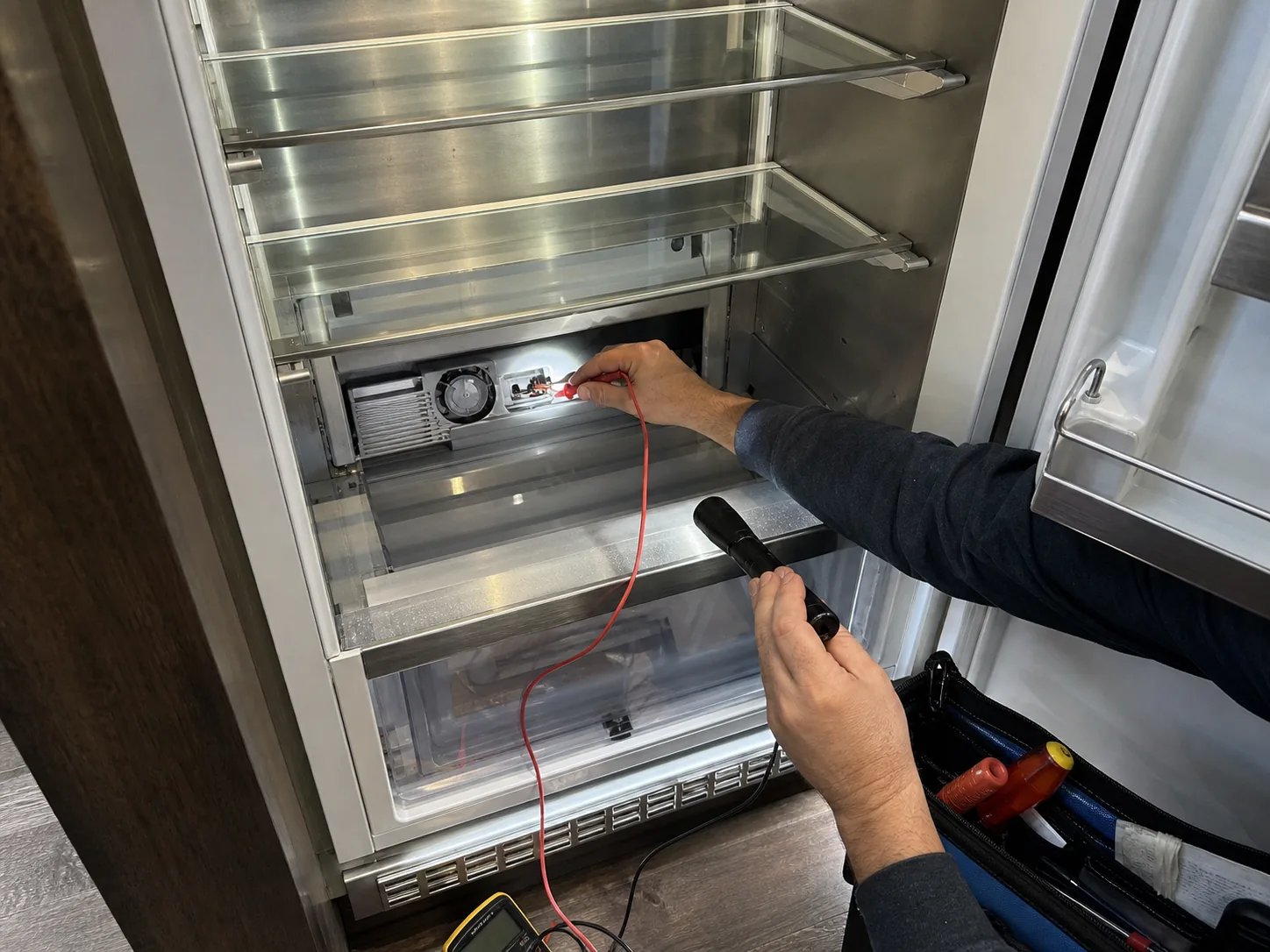
In a Menlo Park kitchen the refrigerator is rarely tucked away. The open-plan remodels common around Stanford Hills and West Menlo put the built-in feet from the dining table and the sofa, so a noise a louder house would swallow becomes the thing you hear over dinner. That is usually why people call about sound before anything has actually broken — and the honest first step is sorting the noises that are simply a Sub-Zero doing its job from the ones that point at a part on its way out.
Most of diagnosis here is listening. Each moving component in a built-in has a signature: a fan out of balance rattles, a fan bearing whirs or squeals, a compressor hums or buzzes, an ice maker clicks and clunks on cycle, and a water valve can knock the pipes. Tell us where the sound comes from, when it happens, and what it sounds like, and we can usually name the suspect before the truck arrives. Below is how we map the most common ones — including the vibration that quietly worries collectors with a wine column in a butler's pantry.
Map the sound
What each Sub-Zero noise usually means
Before you call
How to pin down the noise yourself
- Locate the soundStand at the unit and decide: is it coming from the bottom-rear (condenser fan, compressor, drain pan), inside the compartment (evaporator fan), or up at the ice maker? Where it lives narrows the suspect list immediately.
- Open the door testOpen the fresh-food or freezer door and listen. If the noise stops, it is almost certainly the evaporator fan, which cuts out when the door opens. If it keeps going, look toward the compressor, condenser fan or ice maker instead.
- Time it to the cycleNote whether the sound is constant, comes only when the unit kicks into a cooling cycle, or only every few hours. Cycle-linked noise points at fans and the compressor; periodic clunks point at defrost or the ice maker.
- Clear the easy causesPull the lower grille and vacuum the condenser area; make sure the unit is level and not touching the cabinet sides, and that nothing on top or behind is resonating. A surprising share of new noises are debris or contact, not a failed part.
- Record it, then callA ten-second phone video with sound, plus your model number, lets us arrive with the likely part. Grinding, banging, or a buzz paired with warming food means stop and call rather than keep running it.
Why Menlo Park Sub-Zero Repair
Noise diagnosed by ear and meter, not by guess
Related: sealed system & compressor · not-cooling diagnostic · wine storage & vibration · repair-cost hub.
Common questions
Sub-Zero noise questions in Menlo Park
Which Sub-Zero noises are normal?
A steady low hum from the compressor, soft airflow from the fans, the click and clunk of an ice maker harvesting, occasional gurgles from refrigerant, and a pop or crack from the cabinet expanding are all normal. Grinding, loud rattling, a buzz that never stops, or banging are not — those are worth a look.
How do I tell the evaporator fan from the compressor?
Open the door. The evaporator fan inside the compartment switches off when the door opens, so if the noise stops the moment you open it, that fan is your suspect. If the sound continues with the door open, look toward the compressor, the condenser fan, or the ice maker at the bottom and rear instead.
My Sub-Zero is buzzing loudly — is the compressor failing?
Not necessarily, and we never assume it. A loud buzz often traces to a condenser fan fouled with debris, a loose part resonating against the cabinet, or a water valve that is energizing. A genuine compressor problem is confirmed with electrical and pressure readings, because it is the most expensive part to replace and the easiest to misdiagnose by sound.
Why does my wine column vibrate or hum?
Wine columns are built to run quietly, so a new hum or vibration stands out — usually a compressor mount that has loosened or a fan guard resonating. Beyond the noise, the vibration can unsettle sediment in bottles aging on their sides, which is why collectors in the area treat it as worth fixing promptly.
Can a noise mean my fridge is about to break?
Sometimes. A worn fan bearing or a straining compressor will often announce itself with sound before it fails outright, so catching it early is genuinely cheaper. But many noises are debris, contact with cabinetry, or a unit that simply needs leveling. We sort the warning signs from the harmless ones rather than alarming you into a part you do not need.
Hearing something new? Record it and let's listen.
A short video with sound and your model number tells us which fan, valve or part to bring before we arrive.