
Symptom diagnostic · Menlo Park, CA
Sub-Zero Freezer Not Freezing in Menlo Park
Soft ice cream and a warm freezer while the fridge stays cold is a freezer-side fault — on a dual-refrigeration Sub-Zero that points to defrost, the evaporator fan or airflow, not the whole unit.
4.9/5 · 1,101 verified customer reviews
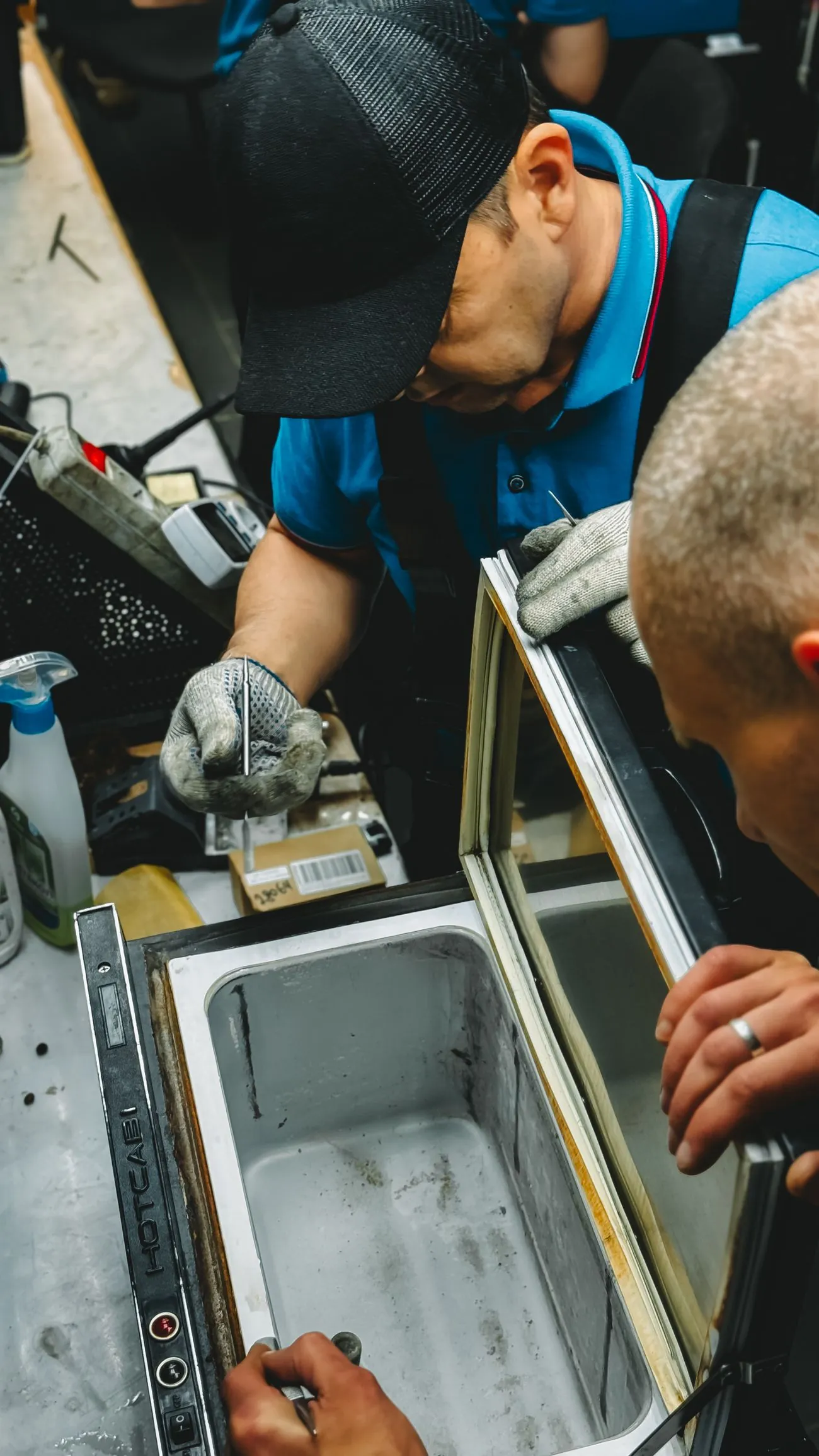
A Sub-Zero freezer that has gone soft — ice cream you can spoon straight from the drawer, frost melting off the packages, an ice maker that quietly gave up — is a different problem from a refrigerator that is running warm, and on these units that distinction is the whole diagnosis. Sub-Zero built-ins use dual refrigeration: the fresh-food and freezer compartments have their own evaporators, their own fans, and in the column estates of Sharon Heights and Stanford Hills, sometimes their own sealed loops entirely. So a freezer warming while the fridge stays cold tells us to look in one place, and a fresh-food side warming while the freezer holds tells us to look somewhere else.
That is why the worst thing you can do is treat "freezer warm" and "fridge warm" as the same call. They share almost no parts. Below is how we sort a warm-freezer complaint in Menlo Park kitchens — from the open-plan island remodels running drawer freezers to the tall panel-ready columns in the older estates — and which of these you can sensibly check before a technician arrives.
Where the cold went
What makes a Sub-Zero freezer warm
Before you call
What to check on a warm freezer
- Confirm it is only the freezerPut a thermometer in the freezer and another in the fresh-food section for an hour. A warm freezer with a cold fridge narrows things to the freezer evaporator, fan, defrost system or air path — not the whole machine.
- Listen for the fanWith the freezer drawer or door open, the evaporator fan normally stops; ear to the cabinet with it running, you should hear steady airflow, not silence, ticking or rubbing. No airflow points at the fan or a frost-blocked coil.
- Look for a frost blockIf you can see the back panel of the freezer iced over solid, or the coil behind a removable panel is a white block rather than defined fins, that is a defrost-system problem holding the cold in the coil instead of the compartment.
- Check the door and loadMake sure nothing blocks the drawer from sealing, the gasket is not gapping, and packed food is not choking the return vents — especially in a tightly loaded drawer freezer during a warm spell.
- Note the timeline, then callWrite down how fast it warmed and whether the ice maker stopped first. A gradual warm-up over days reads as defrost or fan; a sudden loss alongside warming food can be sealed-system and needs instruments, not more DIY.
Why Menlo Park Sub-Zero Repair
Freezer-side diagnosis done the way the unit is built
Related: fresh-food not-cooling diagnostic · sealed system & compressor · error codes & alarms · repair-cost hub.
Common questions
Warm-freezer questions in Menlo Park
My freezer is warm but the fridge is still cold — why?
Because a Sub-Zero is dual-refrigeration: the freezer and fresh-food compartments have separate evaporators and fans. A warm freezer with a cold fridge almost always means a freezer-side fault — a failed defrost heater or thermostat, a stalled evaporator fan, or a coil iced into a block — rather than a compressor or a whole-unit failure.
Why is my ice cream soft but nothing is fully thawed?
A partial warm-up — soft ice cream, sweating packages, but not a full thaw — is the classic early sign of a defrost or evaporator-fan problem. The coil is still making some cold but it is not being cleared of frost or circulated into the drawers. Caught at this stage it is usually a bounded, affordable repair.
Can a too-full freezer cause this?
On drawer freezers it can contribute. Packing food wall-to-wall blocks the return-air path the unit needs to hold zero, and during a warm Peninsula afternoon that is enough to let the compartment drift. We always check load and airflow before condemning a part, because sometimes the fix is rearranging, not replacing.
Is a warm freezer ever a sealed-system problem?
Yes, but it is the least common cause and the one we refuse to guess at. A refrigerant leak or a failing compressor on the freezer loop will warm it, so we put gauges on it and read temperatures to confirm. If it is sealed-system on an older unit, we show you the numbers so the repair-or-replace call is yours with full information.
Should I unplug it while I wait for service?
Leaving it on with an active fault actually helps us — an intermittent defrost issue is far easier to confirm when it is still happening. Move anything truly perishable to a working fridge or freezer, but resist clearing alarms or power-cycling right before the visit; it can hide the very fault we are coming to find.
Freezer warming up? Catch it while it is cheap.
Tell us the freezer and fridge temperatures and your model number; a defrost or fan fix caught early beats a full thaw and spoiled food.