
How it works · 3 min read
Why Is My Ice Salty? How Softener Brine Ends Up in the Ice Bin
Salty ice usually means water-softener brine reached the fridge line. How a Sub-Zero ice maker stores it, what to test at home and when to call a tech.
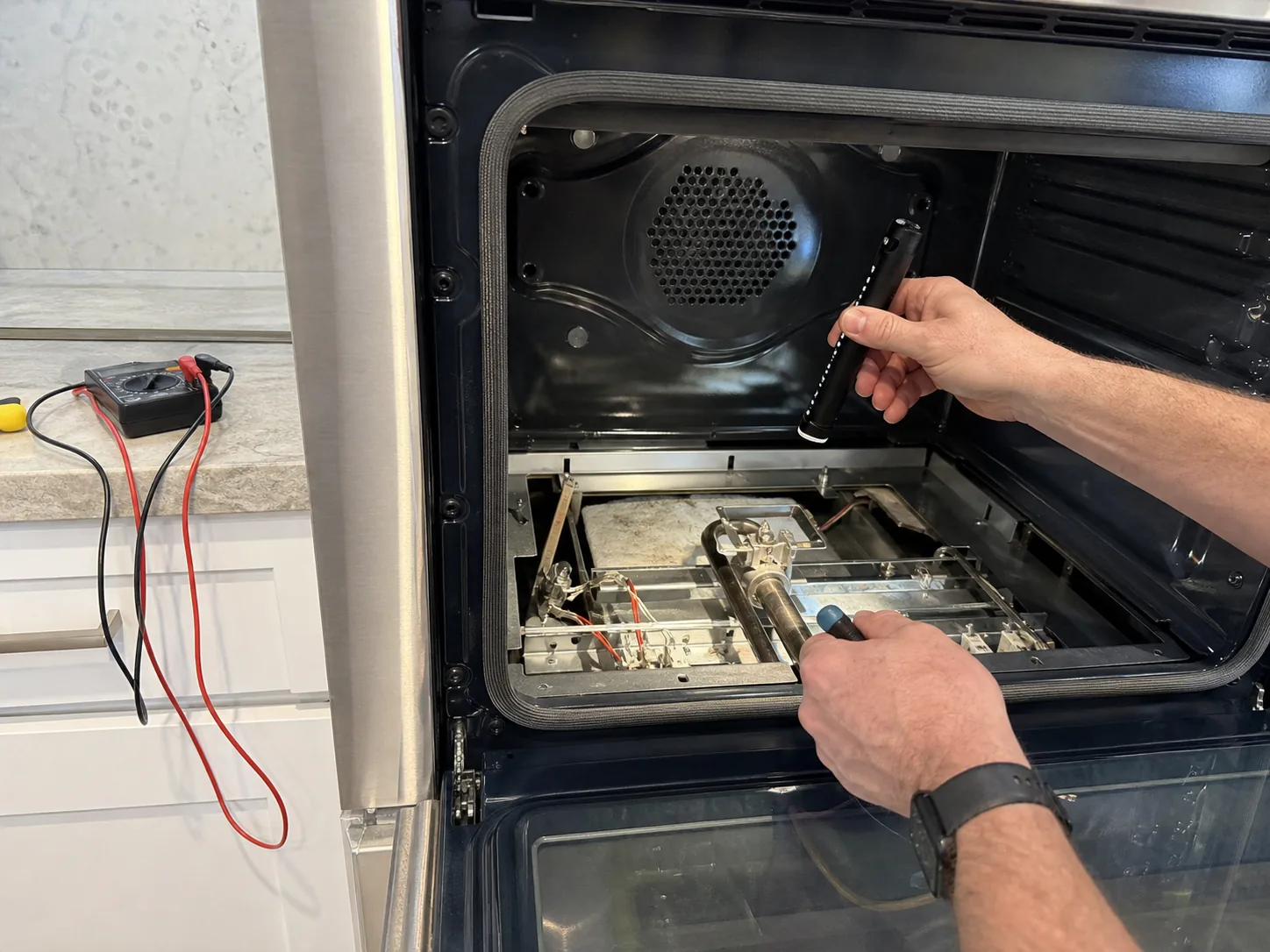
Salty ice almost always means brine from a whole-house water softener reached the line that feeds the ice maker; a refrigerator cannot add salt on its own. A Sub-Zero in-unit ice maker drops about 8 cubes every 2-3 hours and holds them until the bin is full, so one bad softener cycle can sit in the bin for days.
How does a water softener put salt in the ice?
A water softener trades the calcium and magnesium in hard water for sodium held on resin beads, then recharges by drawing brine from its salt tank through the resin and rinsing it down the drain.
A sticking valve, a clogged injector or drain line, a short rinse or an overfilled brine tank can push that brine into the house plumbing instead. Softened water should not taste salty, so salty Sub-Zero ice points to the softener first.
Why is the ice salty when the kitchen faucet tastes fine?
Many homes keep the kitchen cold tap on unsoftened water while the refrigerator supply tees into a softened branch, so a Sub-Zero built-in freezes water the faucet never delivers.
In a frost-free freezer, old cubes also shrink as water sublimates and the minerals stay behind, so Sub-Zero ice that sat for weeks can taste saltier than fresh water.
Why does salty ice linger after the softener is fixed?
Sub-Zero rates its in-unit ice makers at 64-96 cubes per day, about 8 cubes (4.6 oz) per harvest, and harvesting stops once the bin is full, so tainted ice just waits in the bin.
After the softener repair, empty and wash the Sub-Zero ice bin, discard the next few harvests, and allow up to 2 days to refill. A UC-15I undercounter unit uses about 1 gallon of water per hour, so it flushes the line sooner.
Matching the taste to the source
Salty faucet and salty ice: brine is in the whole house. Check the salt tank and whether the softener is stuck mid-regeneration, then call a softener service.
Clean faucet, salty Sub-Zero ice: the refrigerator line likely taps softened water, and a plumber can reroute it.
Stale or salty old cubes only: stored ice has concentrated minerals or absorbed odors. Dump and wash the bin.
Chemical taste: a new filter or tubing can flavor the first batches. Run water through the new filter, and call a technician if the taste persists.
Should a reverse osmosis system feed a Sub-Zero?
Reverse osmosis removes most dissolved sodium, so an RO unit keeps ice salt-free in a softened house. Sub-Zero accepts RO water if pressure stays steady between 35 - 120 psi; models with an internal push-in or twist-in filter should have it bypassed, and copper line should not follow the RO system.
Depending on the model, Sub-Zero requires 20-100 psi or 35-120 psi and supplies no gauge, so a plumber should confirm pressure.
FAQ
Questions & answers
Why does my fridge water taste like salt?
Fridge water tastes like salt when a softener feeding the refrigerator line leaks brine or skips its rinse. If the kitchen faucet tastes clean, the fridge line probably taps a softened branch.
Why does my ice taste bad but the water is fine?
Stored cubes absorb freezer odors and concentrate minerals as they shrink, so old ice tastes worse than the water. Dump the bin, seal strong foods, and taste ice made in the last 2-3 hours.
Why do salt and ice get so cold?
Salt lowers the freezing point of water, so salt melts ice, and that melting pulls heat from the mix until it falls well below 32°F. The same effect can leave brine-tainted cubes softer than normal.
When should I call a technician about salty ice?
Call a technician when fresh ice from a clean supply still tastes off, cubes come out small or hollow, or the inlet valve or fill tube drips. A Menlo Park technician checks the valve, fill tube, filter housing and ice maker together. Locally, Menlo Park Sub-Zero Repair covers this: (650) 699-5567.
Rather leave it to a specialist?
Call or book with your model number and symptom ready, and we will route the visit with the likely parts in mind.
| Usual source | Water-softener brine reaching the refrigerator supply line |
|---|---|
| Ice maker pace | About 8 cubes every 2-3 hours; up to 2 days to refill an empty bin |
| RO feed pressure | Steady 35 - 120 psi, with any internal filter bypassed |
| Owner vs technician | Owner dumps the bin and checks the softener; a technician checks the inlet valve, fill tube and ice maker |
| Local help | Menlo Park Sub-Zero Repair — (650) 699-5567 |
Book this repair: Sub-Zero Ice Maker & Water Line Repair